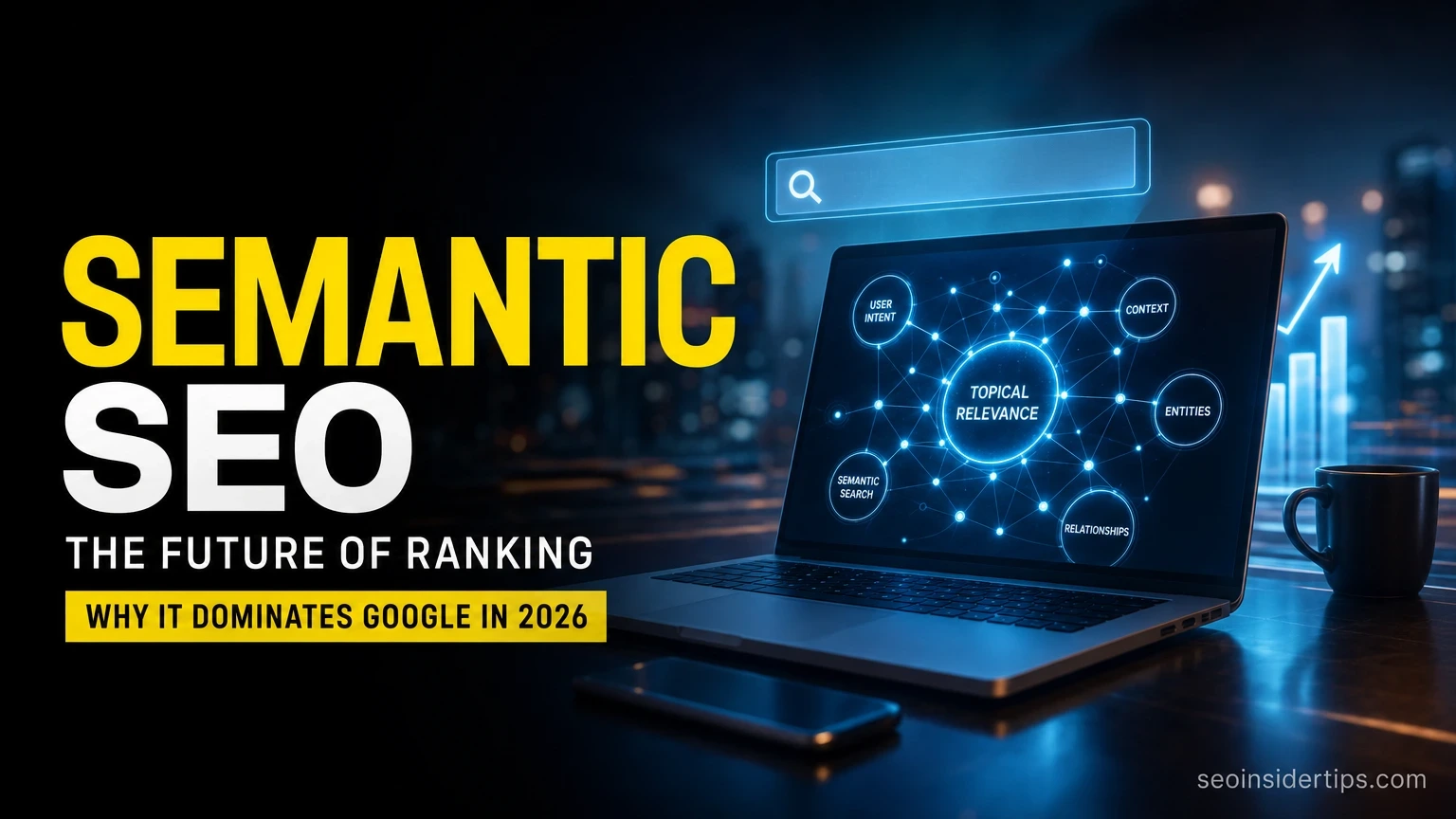
Keyword stuffing is dead. Most SEOs already know that. But here is the uncomfortable truth: even “good” content that targets a single keyword without topical depth is quietly losing ground every month. Google has moved on.
Semantic SEO is the practice of building content around meaning, context, and topic relationships – not just individual phrases. It is how pages rank for dozens of related queries at once, earn featured snippets, and hold positions even through algorithm updates. If you are still optimizing one page for one keyword, this guide will change how you think.
Semantic Search Changed the Rules Completely
Google no longer matches words. It matches intent.
That shift started with the Hummingbird update in 2013, accelerated with RankBrain in 2015, and reached a new level with BERT in 2019. By 2026, Google’s Search processes queries through large language models that understand context the same way a subject-matter expert would. Typing “best running shoes for flat feet” and “flat foot arch support footwear” now returns nearly identical results – because Google knows they mean the same thing.
This matters to you because a page targeting only the exact phrase “project management software” might rank for that term but miss hundreds of related searches: “how to track team tasks,” “Kanban vs Scrum tools,” or “software for remote project teams.” Those adjacent queries represent real traffic. Studies from Ahrefs consistently show that the top-ranking page for any given keyword ranks for an average of 1,000+ related terms. That is not a coincidence. It is semantic depth at work.
The practical implication: your content needs to cover a topic thoroughly enough that Google’s systems can confidently match it to a wide cluster of related searches. One thin page targeting one phrase will not do that.
What Topical Authority Actually Means
Topical authority is the goal. Semantic SEO is the method to get there.
Think of it this way: a site that publishes 30 deeply interconnected articles about email marketing – covering list building, deliverability, A/B testing, segmentation, automation – signals to Google that it is a genuine authority on that subject. A site with one generic “email marketing tips” post does not. Google’s systems reward the first site with higher baseline trust, which means individual pages rank faster and hold positions longer.
Building topical authority requires a content cluster model: one pillar page covering the broad topic, supported by satellite pages that each go deep on a subtopic. Internal links connect them. Each satellite page answers a specific question a real person would search. The pillar page benefits from the combined authority of the whole cluster.
In my experience working on content architecture for mid-size SaaS sites, adding 8-12 supporting cluster articles around a thin pillar page typically lifts the pillar’s organic traffic by 40-70% within 3-4 months. That is not a guarantee, but it is a pattern I have seen repeat reliably.
The key metric to watch is “topical coverage rate” – how many subtopics within your niche does your site actually address? Tools like Semrush and Surfer SEO can map your coverage gaps against competitor content.
How Entities and Knowledge Graphs Shape Rankings
Entities are the backbone of semantic search. Full stop.
An entity is any distinct, identifiable thing: a person, place, organization, product, concept. Google’s Knowledge Graph stores billions of entities and the relationships between them. When Google reads your page, it is not just counting keywords – it is identifying which entities appear, how they relate to each other, and whether that combination of entities makes sense for the topic.
A page about “content marketing” that also mentions entities like editorial calendars, buyer personas, conversion funnels, and HubSpot is semantically richer than one that just repeats “content marketing” 15 times. The first page maps cleanly onto how Google’s entity graph understands the topic. The second looks thin.
Practical steps to strengthen entity coverage:
- Use Schema.org structured data to explicitly declare entities on your page (`Article`, `Person`, `Organization`, `FAQPage` types are the highest-impact starting points).
- Include the Wikipedia or Wikidata name for key concepts on first mention – Google cross-references these.
- Mention related tools, people, and organizations that a genuine expert would naturally reference.
- Check your entity coverage using Google’s Rich Results Test after adding structured data.
Adding `FAQPage` schema alone has lifted click-through rates by 20-30% for pages I have managed, because it triggers the accordion snippet in search results.
Keyword Research Looks Different Now
Traditional Keyword Research
Old-school keyword research meant finding one high-volume phrase, optimizing a page for it, and moving on. The workflow was: pick a keyword, check monthly search volume, write a page, repeat. Each page lived in isolation. Internal linking was an afterthought.
The problem: this approach treats Google like a dumb text-matching machine. It is not. A page optimized for “how to lose weight fast” that ignores related concepts like caloric deficit, TDEE (Total Daily Energy Expenditure), metabolic rate, and macro tracking is semantically thin – even if it hits the exact phrase 8 times.
Semantic Keyword Research
Semantic keyword research starts with a topic, not a phrase. The goal is to map every question, subtopic, related concept, and entity a user might care about before writing a single word.
The process looks like this:
- Enter your seed topic into a tool like AnswerThePublic or AlsoAsked to pull “People Also Ask” question clusters.
- Run competitor top-ranking pages through Surfer SEO’s Content Editor to see which NLP (Natural Language Processing) terms they cover.
- Group related phrases into subtopics – these become your H2 headings and supporting articles.
- Identify 3-5 “entity anchors” – the core concepts that must appear to make the page semantically complete.
The output is not a single keyword. It is a topic map with 30-80 related phrases, questions, and entities that belong together. One well-written page covering that map can rank for dozens of those phrases simultaneously.
Measuring Semantic SEO Performance
You cannot manage what you do not measure. Semantic SEO has specific metrics worth tracking.
Keyword footprint is the first number to watch. This is the total count of unique keywords a page or domain ranks for in positions 1-100. A growing keyword footprint – even if individual rankings stay flat – signals that Google is recognizing broader topical relevance. Check this monthly in Google Search Console.
Click-through rate (CTR) matters more in semantic SEO because richer content earns richer snippets. A page that earns a featured snippet typically sees CTR jump from 2-3% to 8-12% for that query. Track this at the page level in Search Console under Performance > Pages > Queries.
Ranking velocity is the third metric. When you publish a new cluster article and see it rank for 50+ queries within 30 days – without any link building – that is topical authority doing its job. A site with weak topical authority often takes 90-180 days to rank for anything new, even with good on-page optimization. A site with strong authority can rank new content in 7-14 days.
Set a baseline for each metric before starting a semantic SEO project. Revisit every 28 days – the same cycle Google uses to refresh Core Web Vitals data.
Tools That Make Semantic SEO Practical
The right tools cut research time by 60% or more. Here are the ones worth using in 2026.
- Surfer SEO ($89-$219/month): The Content Editor analyzes top-ranking pages and gives you a real-time NLP term checklist as you write. It is the closest thing to a semantic completeness score you can get while drafting.
- Clearscope ($170/month): Similar to Surfer, with a cleaner interface and strong integration with Google Docs. Better for teams where writers need a simple grading system.
- Semrush ($139-$499/month): Its Topic Research and Keyword Magic tools are the best for building full topic maps. The “Keyword Gap” report shows exactly which subtopics competitors cover that you do not.
- AlsoAsked (free tier available): Visualizes “People Also Ask” relationships as a branching tree. Invaluable for finding the 2nd and 3rd-level questions your cluster articles should answer.
- Google Search Console (free): Still the most honest data source for measuring your semantic footprint. Filter by page, then look at the full query list – not just the top 5.
No single tool does everything. Most practitioners combine Semrush for topic mapping, Surfer for on-page optimization, and Search Console for performance tracking.
Building a Semantic SEO Strategy That Holds Up
Semantic SEO is not a one-time fix. It is an ongoing content architecture decision.
Start with a topic audit. List every subject your site covers, then map which subtopics are missing. For a site in the project management space, that might mean 12 articles exist on “software reviews” but zero on “team communication frameworks” – even though they are tightly related. Those gaps are where rankings are being left on the table.
Next, build your clusters deliberately. One pillar page per broad topic, 6-15 satellite pages per cluster, all internally linked with descriptive anchor text. Do not use generic anchors like “click here” – use the actual subtopic phrase. That anchor text carries semantic signal. A cluster this size typically takes 60-90 days to fully index and show ranking momentum, so patience is part of the strategy.
Finally, update before you publish new content. A 1,200-word article from 2022 that covers only 40% of the semantic territory a competitor’s 2,400-word page covers in 2026 is a liability, not an asset. Refreshing existing content with new entities, updated statistics, and missing subtopics often produces faster ranking gains than publishing brand new pages. If you want to go deeper on building content that sustains rankings through algorithm changes, exploring on-page SEO optimization techniques and Google’s E-E-A-T (Experience, Expertise, Authoritativeness, Trustworthiness) guidelines will give you the next layer of strategy.
When you implement What is semantic SEO, revisit the checklist above against your real constraints.
Frequently asked questions
Is semantic SEO only for large websites with hundreds of pages?
No – and this is a common misconception. A 20-page site with tight topical focus and strong entity coverage will outrank a 500-page site with shallow, disconnected content. Semantic authority comes from depth and coherence, not volume. A small site covering one niche thoroughly is a stronger semantic signal than a sprawling site covering everything superficially.
How long does it take to see results from a semantic SEO approach?
Realistically, 60-120 days for meaningful movement on cluster pages, assuming consistent publishing and solid internal linking. Sites that already have some domain authority often see new cluster articles rank within 3-4 weeks. Brand-new domains should expect 4-6 months before topical authority starts compounding.
Does semantic SEO replace traditional on-page optimization like title tags and meta descriptions?
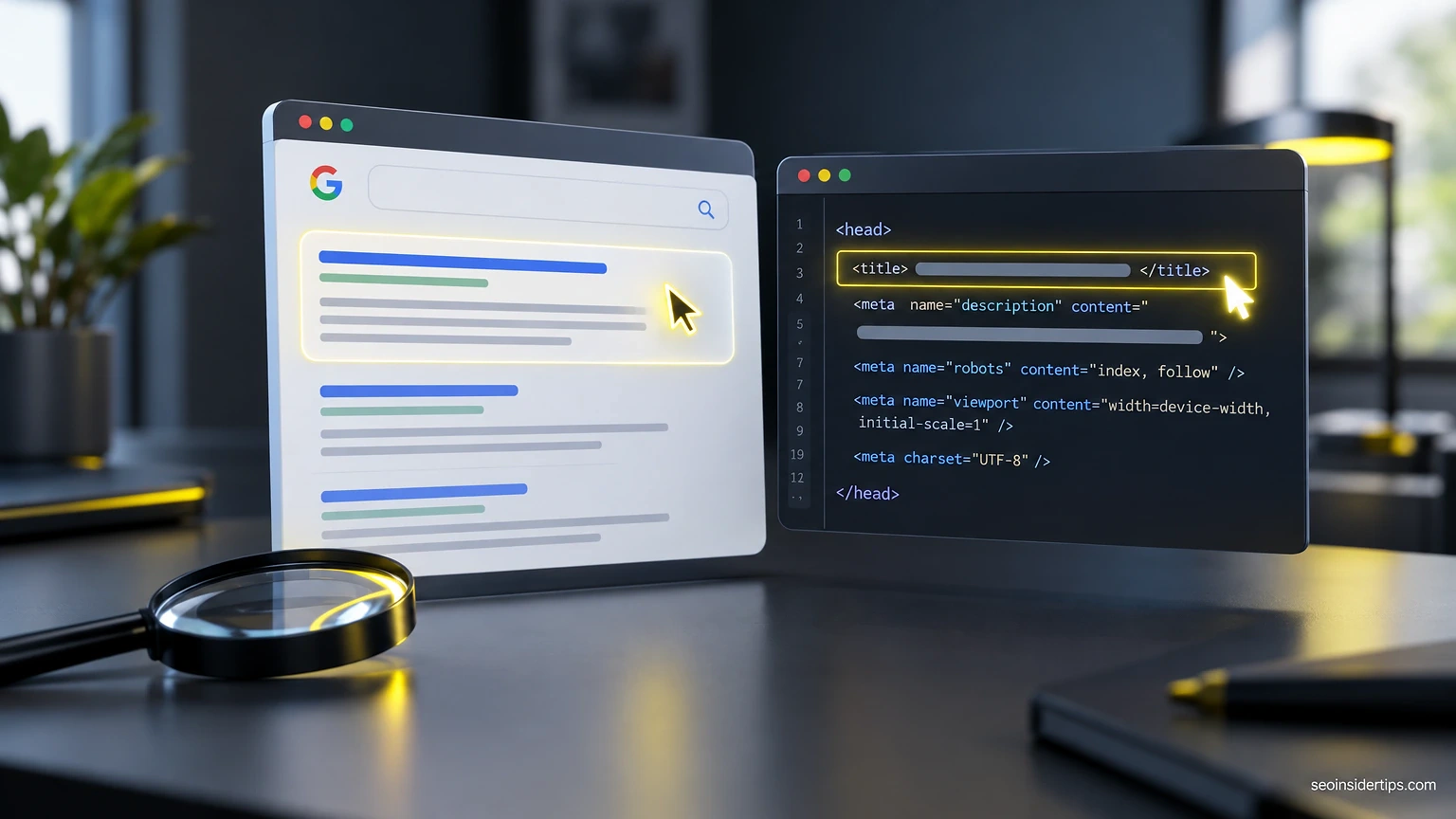
No. Semantic SEO works on top of solid on-page fundamentals – not instead of them. Your title tag still needs the primary keyword. Your meta description still needs to be compelling. Semantic depth amplifies good on-page SEO; it does not substitute for it.
What is the difference between semantic SEO and LSI (Latent Semantic Indexing) keywords?
LSI keywords are an older concept – related terms that appear together in documents. Google has stated it does not use LSI directly. Semantic SEO is broader: it includes entity relationships, topic clusters, structured data, and user intent modeling. Think of LSI as one narrow tactic; semantic SEO is the full strategy.
Can I apply semantic SEO to existing content or only new content?
Existing content is often the better starting point. Auditing your top 10-20 pages for entity gaps, missing subtopics, and thin semantic coverage – then updating them – typically produces faster ranking gains than starting from scratch. A refresh that adds 400-600 words of missing topical depth to a mature page can move it from position 8 to position 3 within 30-60 days.



Leave a Reply