Most SEO advice tells you to “write for humans first.” That sounds right. It is also incomplete.
The truth is, writing content that ranks in 2026 means satisfying two audiences at the same time – a reader who wants a fast, useful answer and a search engine that needs clear structure, intent signals, and semantic depth. Neither alone is enough. The good news: once you understand how both work together, the process becomes repeatable.
Most Writers Get Keyword Research Backwards
Start with what people actually type, not what sounds good to you. That single shift changes everything about how your content performs.
Most writers pick a topic first, then hunt for a keyword to match it. Flip that. Open Google Search Console or Ahrefs and look at what queries already bring people close to your site. You will often find 3-5 related terms clustered around the same intent. That cluster is your content target – not a single phrase.
Here is a practical way to structure keyword selection:
- Pick a primary keyword with 500-5,000 monthly searches (sweet spot for most sites under 50 domain authority).
- Find 3-4 semantic variants – related questions, synonyms, “near-miss” phrases Google treats as equivalent.
- Check the top 5 ranking pages. Note average word count, heading structure, and what questions they answer.
- Identify the gap – what none of them cover well. That gap is your angle.
A page targeting one exact phrase rarely outranks a page that covers the full topic cluster. Google’s natural language processing has been sophisticated enough since 2019 to understand that “how to create SEO content” and “writing optimized articles for search” are the same intent. Use that to your advantage.
Structure Is the Part Most Writers Skip
Good structure is not about formatting for its own sake. It tells both the reader and Google what your page is actually about.
Every piece of optimized content needs a clear hierarchy. Your H1 carries the primary keyword. Your H2s should each answer a distinct sub-question someone might search. Your H3s (when you use them) go inside sections over 250 words and break down a specific point further. This is not decoration – it is architecture.
A few structure rules that make a measurable difference:
- Keep your primary keyword in the first 100 words. Google weights early placement.
- Use your target phrase or a close variant in at least 2 H2 headings.
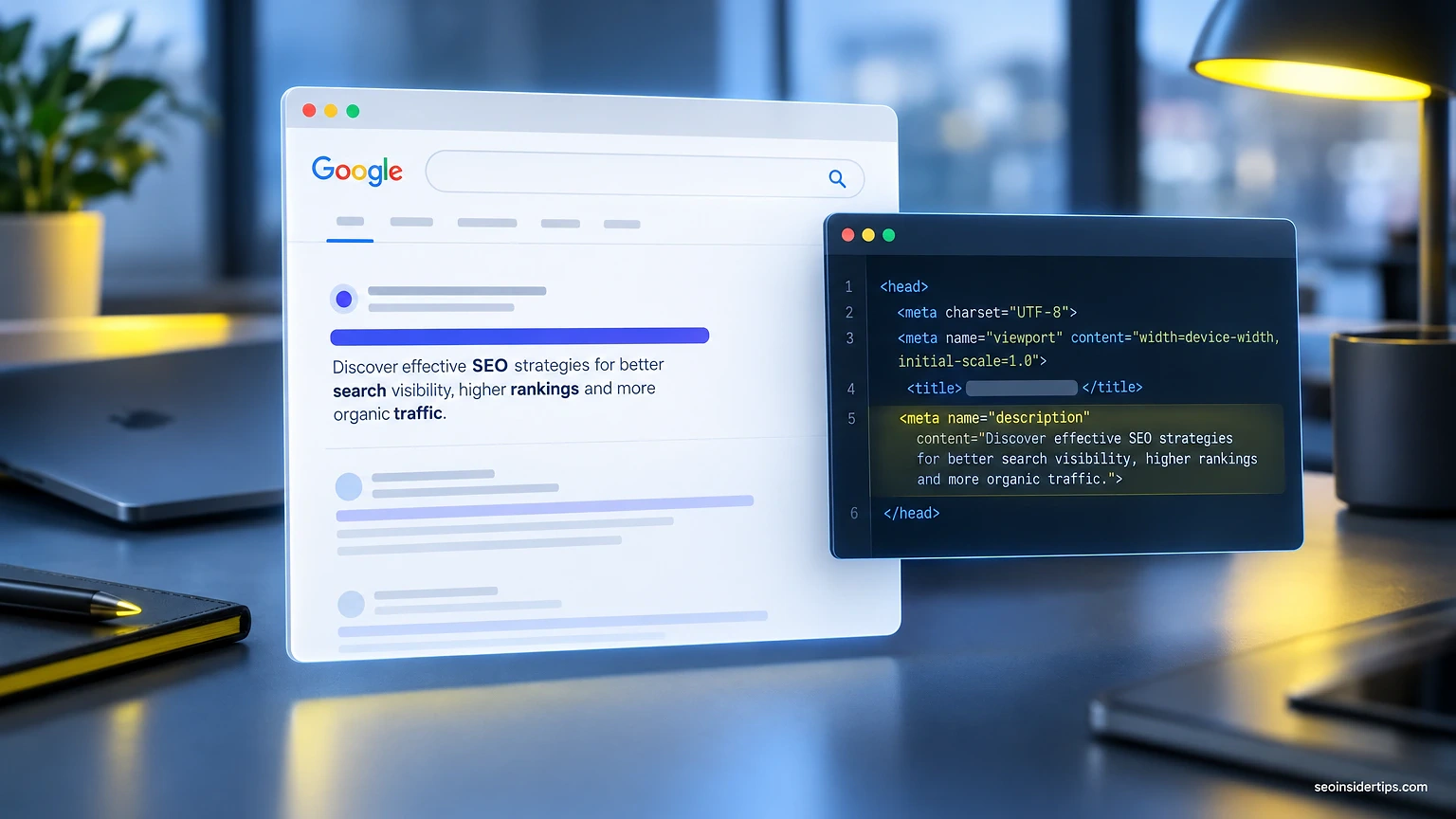
- Write a meta description under 155 characters that includes the keyword and a specific benefit. Pages with optimized meta descriptions see 5-10% higher click-through rates in most A/B tests.
- Put your most important information above the 300-word mark. Many readers bail before they scroll.
One tool worth knowing: Surfer SEO scores your content structure against the top 10 ranking pages in real time. It costs around $89/month for the basic plan, but even a free trial run on a few pages will show you structural gaps you would never catch manually.
How to Match Search Intent (and Why Getting It Wrong Kills Rankings)
Intent mismatch is the single most common reason good content fails to rank. You can write 2,000 words of genuinely useful material and still land on page 4 if you misjudged what the searcher actually wanted.
Google classifies search intent into four types: informational, navigational, commercial, and transactional. For most content marketers, the battle is between informational and commercial. Someone searching “best CRM for small business” wants a comparison, not a tutorial. Someone searching “how to set up a CRM” wants steps, not a product list. Serve the wrong format and your bounce rate punishes your ranking within weeks.
Here is a quick intent-check process before you write:
- Search your target keyword in an incognito window.
- Look at the top 3 results. Are they listicles, how-to guides, product pages, or definitions?
- Note the average length – Google’s current top results for competitive informational queries average 1,400-2,100 words.
- Match the dominant format. If 4 out of 5 results are listicles, write a listicle.
One more thing: check the “People Also Ask” box. Those questions are Google telling you, directly, what related sub-intents exist for your topic. Answer 2-3 of them inside your article and you increase your chance of capturing featured snippet placements.
On-Page Optimization: The Non-Negotiables
On-page signals still drive rankings. A technically clean page outperforms a sloppy one, even with similar content quality.
Title tag and URL: Your title should include the primary keyword near the front and stay under 60 characters. Your URL slug should be short, lowercase, and hyphenated – something like `/seo-friendly-content-guide`, never `/how-to-write-seo-friendly-content-for-your-website-in-2026-updated`.
Image optimization: Every image needs an alt attribute that describes the image and, where natural, includes a keyword variant. File names matter too – `seo-content-checklist.webp` beats `IMG_4821.jpg` every time. Use `.webp` format where possible; it cuts image file size by roughly 25-35% compared to JPEG at the same visual quality.
Internal linking: Link to 2-4 related pages within every article. Use descriptive anchor text – not “click here.” Pages with strong internal link structures get crawled more frequently and pass authority more efficiently across your site.
Reading level: Aim for a Flesch-Kincaid reading ease score above 50. Hemingway App gives you this for free. Most high-ranking SEO content sits between grade 7 and grade 9 reading level – clear, not dumbed down.
Quick Q&A: Common On-Page Questions
Does keyword density still matter?
Not as a fixed percentage. Google moved past counting repetitions around 2013. What matters now is topical coverage – do you mention the concepts, entities, and related terms that belong in a complete answer? Aim for natural usage across the full document, not a target like “use the phrase 15 times.”
How long should my content be?
Match the top-ranking pages for your specific query. There is no universal answer. Informational guides often rank best at 1,500-2,500 words. Simple definitions rank at 300-600. Chasing word count without purpose is a waste of time.
Should I update old content or write new pages?
Both, but prioritize updates first. A page with existing authority that has dropped from position 5 to position 18 can often be recovered with a targeted refresh – new data, better structure, added sections – faster than a new page can build authority from scratch.
Writing for Readability Without Dumbing It Down
Clear writing is not the same as simple writing. Your goal is zero friction between your idea and the reader’s understanding.
Short sentences help. So does white space. But the biggest readability gain comes from front-loading your point – say the conclusion first, then explain it. Most writers do the opposite: they build up to the point over three paragraphs and lose the reader halfway through.
A few habits that consistently lift readability scores:
- Use active voice. “Google rewards clear structure” beats “clear structure is rewarded by Google.”
- Cut filler transitions. “In addition to the above” adds zero information.
- One idea per paragraph. If a paragraph has two distinct thoughts, split it.
- Read your draft aloud. If you stumble, the sentence is too long or awkwardly phrased.
Grammarly flags passive voice and complex sentences in real time. It is not a substitute for judgment, but it catches the mechanical issues fast. Pair it with Hemingway App for a two-pass readability check before you publish.
Factual specificity also builds trust. Vague claims (“many marketers see improvement”) are forgettable. Specific claims (“pages with optimized title tags average 12% higher CTR in Search Console data”) are memorable and shareable. Use real numbers from your own data or credible sources – and cite them.
Making Every Article Work Harder for Your Site
Writing one strong article is good. Building a system that produces strong articles repeatedly is what actually moves organic traffic.
The most effective content operations I have seen share three habits. They research before they write – not during. They use a repeatable template: intent check, keyword cluster, outline, draft, readability pass, on-page audit. And they schedule content reviews every 6-12 months to update pages that have drifted down the rankings.
Tools like Screaming Frog (free up to 500 URLs) help you audit your existing content for thin pages, broken internal links, and missing meta data. Running a crawl quarterly takes about 20 minutes and surfaces problems before they compound.
The real open up is treating content as an asset, not a task. A well-optimized article can generate traffic for 3-5 years with minimal maintenance. That math makes the upfront investment in proper keyword research, structure, and on-page optimization worth it every time. If you want to go deeper on the technical side of content performance, exploring Core Web Vitals and page speed optimization is a natural next step – those signals directly affect how Google evaluates the pages your content lives on.
When you implement How to write SEO friendly content, revisit the checklist above against your real constraints.
Frequently asked questions
How many times should I use my primary keyword in an article?
There is no magic number. For a 1,500-word article, 6-10 natural mentions of your primary phrase and its variants is a reasonable range. The test is simple: read the paragraph aloud. If the keyword feels forced, replace it with a synonym or restructure the sentence. Google understands context well enough that stuffing the exact phrase hurts more than it helps.
Does content length directly affect rankings?
Length is a proxy, not a ranking factor. Longer content tends to rank better because it covers a topic more thoroughly – not because of the word count itself. A 600-word page that fully answers a simple query will outrank a 2,000-word page that pads the same answer with filler. Match length to what the topic genuinely requires.
How soon will a new article start ranking on Google?
For a new page on a site with moderate authority, expect 3-6 months before you see stable rankings. Pages on established sites with strong internal links can index and rank within 2-4 weeks. Submitting your URL through Google Search Console after publishing speeds up initial indexing, though it does not guarantee fast ranking.
Should I use AI writing tools to create SEO content?
AI tools like ChatGPT or Gemini are useful for outlining, drafting, and ideation – but raw AI output rarely passes a readability or factual accuracy check without editing. Google’s Helpful Content system targets thin, generic content regardless of who or what produced it. Use AI to accelerate the process, not to replace the judgment and specificity that make content genuinely useful.
What is the fastest way to improve an existing article’s ranking?
Add a section answering a “People Also Ask” question that your page currently misses. Update any statistics or examples older than 18 months. Improve the title tag to be more specific and benefit-driven. Add 1-2 internal links from higher-authority pages on your site pointing to the article. These four changes, done in under an hour, are the highest-return refresh actions for most underperforming content.



Leave a Reply