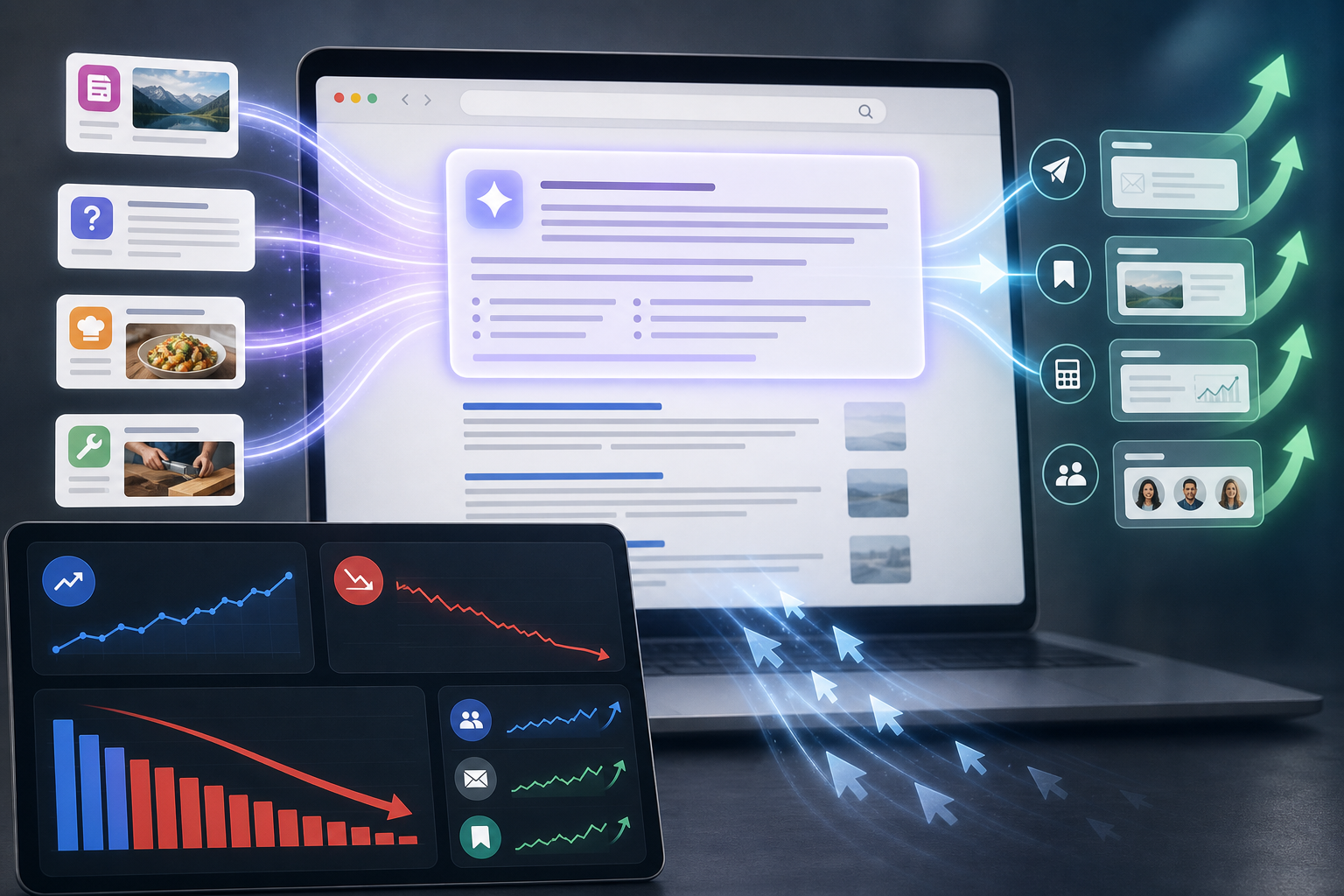
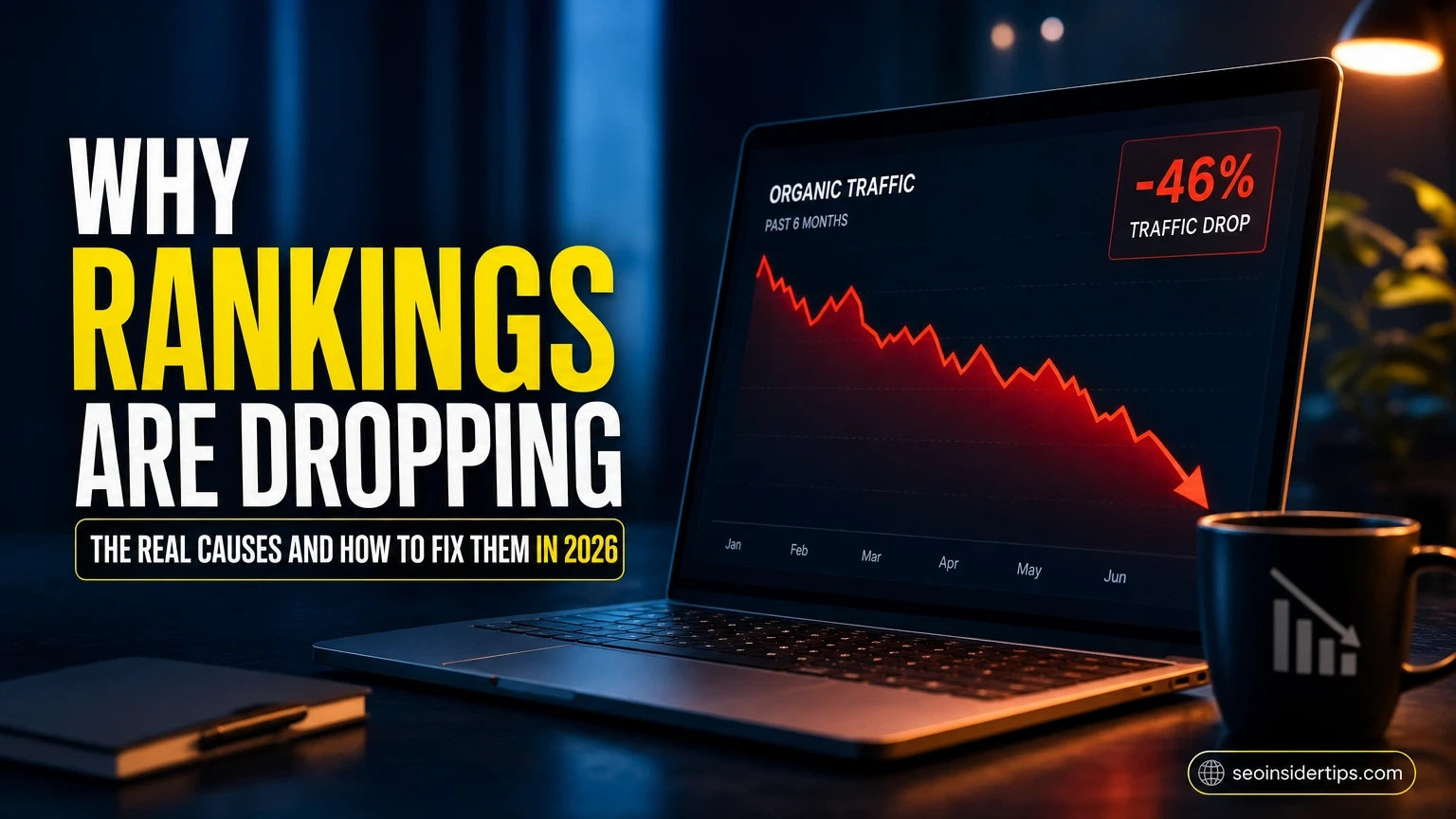
Your website rankings stayed steady last month. Yet organic traffic dropped 15%. Your content still appears on page one, but clicks vanished.
This scenario affects thousands of websites as AI-powered search results change user behavior. Google now answers questions directly in search results. Users get information without visiting your site.
What Generative Engine Optimization Really Means
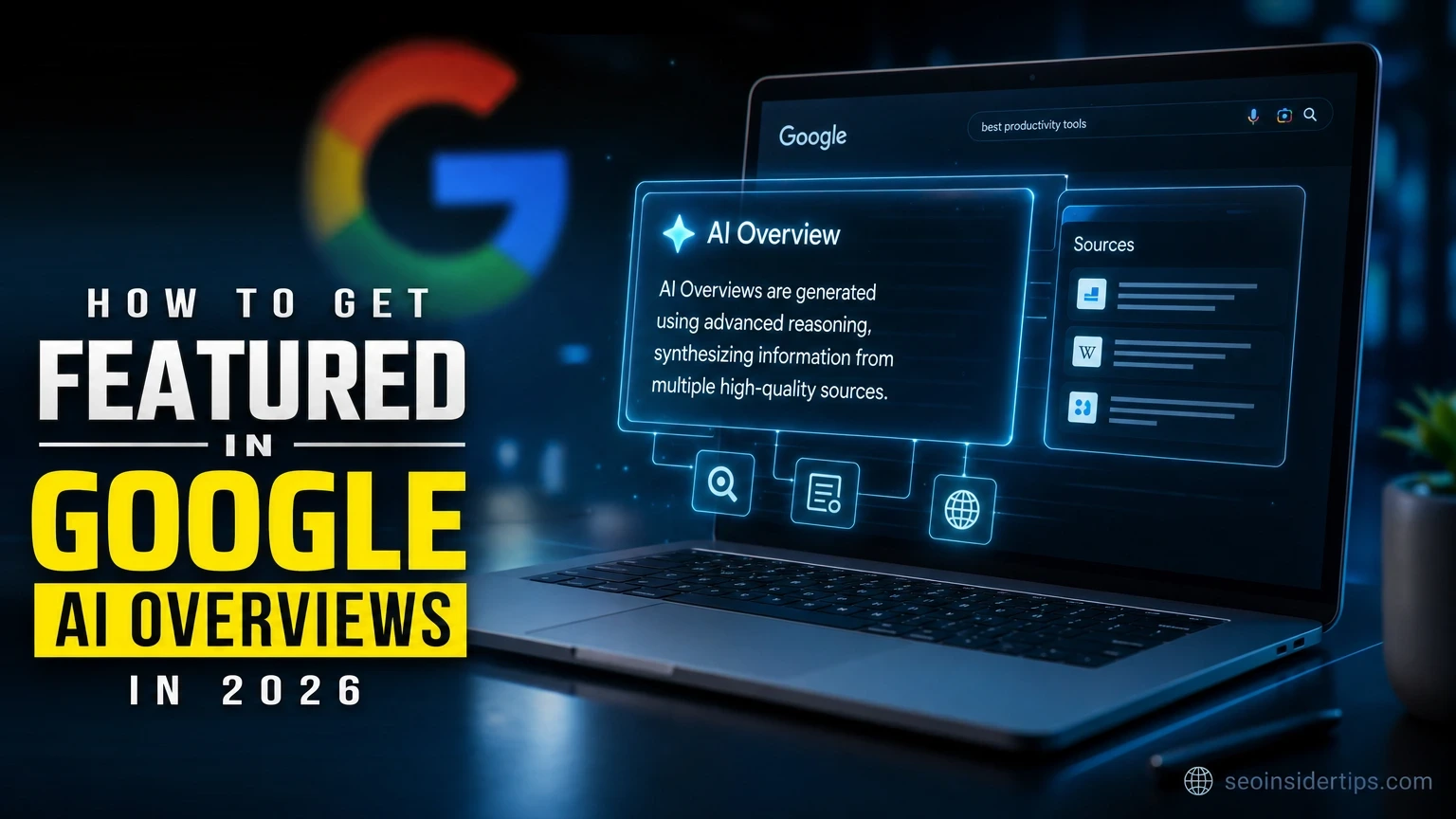
Generative engine optimization describes how AI search features affect website traffic and rankings. Traditional search shows blue links to websites. AI search creates instant answers using content from multiple sources.
Google’s AI Overviews appear in 15% of searches as of late 2024. These summaries combine information from 3-8 websites into single responses. Users find answers without clicking any links.
The technology analyzes web content and creates comprehensive answers. A search for “best laptop for students” might pull prices from one site, specs from another, and reviews from a third. The AI combines this into one cohesive response above traditional results.
Research shows 43% of users get complete answers from AI overviews without visiting source websites. Your content informs the AI response. But you lose the website visit and customer interaction.
How AI Answers Steal Website Clicks
Traditional search results followed predictable click patterns. The top result received 28-35% of clicks. Positions 2-3 got 15-20% each. AI overviews destroy this pattern completely.
Click-through rate studies show dramatic changes after AI implementation. Websites ranking #1 for informational queries now see 40-60% fewer clicks. The AI summary satisfies user intent without requiring site visits.
Consider searching “how to remove wine stains.” Users previously clicked 3-4 results for complete instructions. Now Google’s AI combines steps from several sources into one guide. Users get answers in 30 seconds instead of browsing multiple sites.
Commercial searches like “buy running shoes” still generate clicks because users browse products and compare prices. But informational searches like “symptoms of dehydration” often end with the AI overview. Website owners lose email signups, product discoveries, and brand awareness from actual visits.
Which Content Gets Hit Hardest
How-to guides and tutorials face the biggest traffic drops from AI overviews. AI easily synthesizes step-by-step instructions into complete answers.
Recipe websites report 25-40% traffic decreases for basic cooking queries. Searching “how to boil pasta” returns cooking times and instructions directly in results. Complex recipes with unique techniques still drive clicks. Simple cooking queries rarely do.
FAQ-style content struggles in the AI era. Questions like “what is compound interest” get complete answers in overviews. Educational websites lose traffic for straightforward explanatory content.
Local business information faces similar challenges. Searches for “restaurant hours” or “store locations” get answered without website visits. Hours, addresses, and phone numbers appear directly in search results. But in-depth analysis, personal experiences, and original research still generate clicks because users want human perspectives.
Why SEO Metrics Are Becoming Meaningless
Keyword rankings and search visibility mean less when AI overviews dominate results. Websites can rank #1 but receive minimal traffic if AI summaries answer questions completely.
Click-through rates vary dramatically by search intent. Informational queries that generated 2-3% CTR now see rates below 1%. Commercial queries maintain higher rates because users browse and compare options.
Search volume data becomes misleading. A keyword showing 10,000 monthly searches might only deliver 4,000 actual visits if 60% of users find answers in AI overviews. Traditional keyword research tools don’t account for AI interference.
Zero-click searches expanded beyond featured snippets. Previously, 25% of Google searches ended without clicks. With AI overviews, this approaches 40% for certain query types. Users spend 45-90 seconds reading AI summaries before deciding whether to click through.
How to Stay Visible in AI Results
Getting cited in AI overviews becomes the new SEO priority. You might not receive direct clicks, but appearing as a source builds authority and brand recognition. Users notice which websites contribute to AI answers.
Create content too complex for AI to summarize completely. Instead of “5 tips for better sleep,” develop comprehensive guides covering sleep science, personalized routines, and specific problem troubleshooting. AI overviews work best with simple, factual content.
Focus on building topical authority in your niche. Websites providing expert information across related topics get cited more frequently. Cover fitness, nutrition, recovery, equipment, and training methods rather than just workout routines.
Optimize for conversational search queries. AI overviews appear more often for natural language searches like “why does my car make grinding noise when braking.” Structure content to answer longer, specific questions. Include unique data, quotes, and perspectives that AI cannot generate independently.
Adapting Content Strategy for AI Search
Shift focus from attracting search traffic to building direct reader relationships. Email newsletters, social media followings, and bookmark traffic become more valuable when organic search becomes unreliable.
Create content series requiring multiple visits to complete. Develop multi-part guides where each piece builds on previous content. Users bookmark your site and return directly rather than searching each time.
Emphasize brand-building over pure SEO optimization. When users see your website cited repeatedly in AI overviews, they recognize your expertise. This brand awareness leads to direct searches and referral traffic that bypasses AI interference.
Develop interactive content that AI cannot replicate. Calculators, quizzes, tools, and personalized recommendations provide unique value. Users must visit your website to access these features, protecting you from AI competition.
Building Traffic Beyond Search Algorithms
The shift toward AI-powered search represents a fundamental change in information discovery. Successful websites adapt by focusing on direct audience relationships and irreplaceable human value.
Content strategy should emphasize building trust and expertise that AI cannot replicate. AI overviews might reduce immediate traffic, but they create brand recognition opportunities when your content gets cited as a trusted source. Users remember websites that consistently provide valuable information, even when first encountering it through AI summaries.
The key lies in creating experiences requiring human interaction. Personal stories, detailed analysis, interactive tools, and community discussions provide value beyond simple information retrieval. These elements encourage direct visits and build lasting audience relationships that protect against future search changes.
Frequently asked questions
How much organic traffic do websites lose to AI overviews?
Traffic impact varies by content type and industry. How-to guides and FAQs see 25-60% traffic drops, while commercial and complex topics maintain better click-through rates. The average impact across all content types is 15-25% reduction in organic clicks.
Can websites rank well without appearing in AI overviews?
Yes, traditional rankings remain important for queries without AI overviews. Commercial searches, local queries, and complex topics still generate substantial traffic. Getting cited in AI overviews provides additional brand exposure and authority signals that improve overall search performance.
Should I optimize content specifically for AI overviews?
Focus on creating comprehensive, authoritative content rather than gaming AI systems. AI overviews favor clear structure, factual accuracy, and expert credibility. The same qualities that make content valuable to humans also make it useful for AI synthesis.
What metrics should I track instead of organic traffic?
Monitor brand mentions in AI overviews, direct traffic growth, email subscriber increases, and social media engagement. Track assisted conversions where users discover your brand through AI citations but convert through direct visits later. These metrics better reflect content impact in the AI era.

Leave a Reply