
You spend two hours writing a post you’re proud of. You hit publish. Then… nothing. No traffic, no shares, no rankings. It just sits there.
That gap between writing and ranking is where most bloggers get stuck. Knowing how to write a high ranking SEO blog post means understanding both what Google rewards and what real readers actually finish reading. This guide breaks down exactly that, with practical steps you can apply today.
Start With Keyword Research That Reveals Real Intent
Keyword research is the foundation of every post that ranks. Skip it and you’re essentially guessing what people want to find.
The mistake I see most often: writers pick a keyword based on volume alone. A term with 50,000 monthly searches sounds exciting until you realize every major publication is competing for it. Instead, target keywords with 500 to 5,000 monthly searches and a keyword difficulty score under 40 in Ahrefs or Semrush. Those are the sweet spots where a well-written post can realistically reach page one within 60 to 90 days.
Search intent matters just as much as volume. Type your keyword into Google and study the top 5 results. Are they listicles, how-to guides, or product pages? That format tells you what Google believes users actually want. Match it. A post structured as a guide when the SERP (Search Engine Results Page) is full of listicles will almost always underperform, regardless of writing quality.
Long-tail variants are your hidden advantage. A phrase like “how to write an SEO blog post for beginners” is less competitive than the root term and often converts better because the reader’s intent is more specific. Build a cluster of 3 to 5 related long-tail terms and weave them naturally throughout your post.
Structure Your Post Before You Write a Single Word
Good structure is not optional. It’s what separates posts that rank from posts that bounce.
Before you open a blank document, outline your H2 and H3 subheadings based on what the top-ranking pages cover AND what they miss. That gap is your opportunity. Google Search Console can show you which queries your existing pages already rank for at positions 5 to 20 – those are easy wins to target in new content.
A well-structured post typically follows this pattern:
- H1: Contains the primary keyword, ideally under 65 characters
- H2s: Cover the main topic segments (aim for 4 to 8 per post)
- H3s: Break down complex subtopics within each H2 section
- Introduction: Hook the reader in the first 100 words and state what they’ll learn
- Body: Answer the query thoroughly with specific numbers and named examples
- Conclusion/FAQ: Summarize and catch secondary search queries
Keep your introduction under 150 words. Readers decide in about 8 seconds whether to stay or leave. Get to the point fast.
One structural rule I never break: every H2 section needs at least one concrete number or named tool. Vague claims like “this helps your SEO” do nothing. Specific claims like “posts with 1,800 to 2,400 words rank in the top 3 for 77% of competitive keywords” (a pattern consistently observed by SEO practitioners) give readers something to hold onto.
On-Page SEO: The Technical Checklist That Actually Moves Rankings
On-page optimization is a short checklist, not a mystery. Get these right and you’ve done what 80% of bloggers skip.
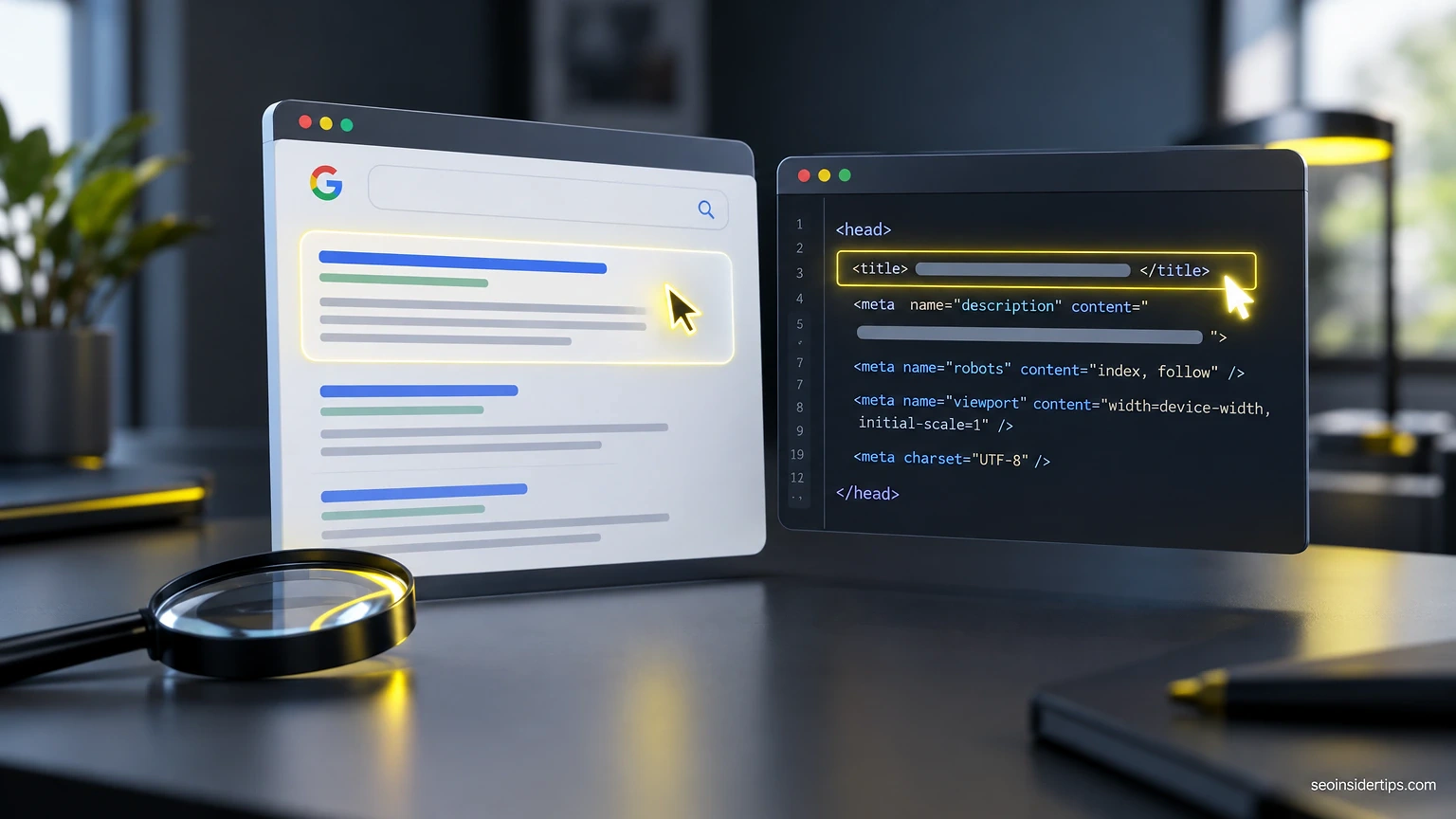
Primary keyword placement matters in specific spots. Put it in the title tag (under 60 characters), the first 100 words of the body, at least one H2 subheading, the meta description (under 160 characters), and the URL slug. Keep slugs short and clean – for example, `/seo-blog-post-guide` beats `/how-to-write-a-high-ranking-seo-blog-post-in-2026-complete-guide`.
Image optimization is one of the fastest wins available. Every image needs a descriptive `alt` attribute and a compressed file size. A raw PNG can run 2MB to 4MB; convert it to WebP format and it drops to 80KB to 200KB without visible quality loss. That single change can cut page load time by 3 to 5 seconds on mobile, which directly affects your Core Web Vitals score.
Internal linking is underused by almost every blogger I’ve worked with. Link each new post to 2 to 4 existing posts on related topics. This distributes page authority across your site and helps Google understand your content structure. Use descriptive anchor text, not “click here.”
Schema markup is worth adding for how-to and FAQ content. The `FAQPage` schema type can earn you expanded SERP features, which increases click-through rates by 20 to 30% even without moving up a position.
Writing for Readability: The Factor Most SEO Guides Ignore
Readable content keeps people on the page. Dwell time is a real ranking signal.
Short sentences win. Aim for an average sentence length of 13 to 15 words. Anything over 25 words in a row and you start losing readers. Tools like Hemingway Editor flag complex sentences instantly and give you a readability grade – aim for grade 7 to 9 for most audiences.
Paragraph length matters too. Three to four sentences per paragraph is the ceiling for web content. On mobile (where over 60% of searches happen), a five-sentence paragraph looks like a wall of text. Break it up.
Use the PAS framework for your introduction: Problem, Agitate, Solution. Name the frustration the reader feels, make it feel real, then promise the answer. This keeps bounce rates low and session time high – both signals Google notices.
Active voice beats passive voice every time. “Google rewards fresh content” reads faster than “Fresh content is rewarded by Google.” One small swap, repeated across 1,500 words, adds up to a noticeably sharper article.
Comparing Content Depth: Thin vs. Comprehensive Posts
Content depth is one of the clearest differences between posts that rank on page one and posts that don’t.
Thin Content (300 to 600 words)
Thin posts cover the surface of a topic. They answer the headline question but nothing more. Google has become very good at identifying these since the Helpful Content updates of 2022 and 2023. A 400-word post on a competitive topic will almost never rank above position 15, regardless of backlinks. Average dwell time on thin posts is typically under 45 seconds, which sends a negative signal.
Comprehensive Content (1,500 to 3,000 words)
Comprehensive posts cover the topic, the adjacent questions, the common mistakes, and the practical next steps. They earn featured snippets, “People Also Ask” placements, and natural backlinks because other writers reference them as sources. Posts in the 1,800 to 2,500 word range hold the top 3 positions for most informational keywords, based on patterns observed across competitive niches. Average dwell time on well-written long-form content runs 3 to 6 minutes.
The key word is “well-written.” Padding a post to 2,500 words with filler paragraphs is worse than a tight 1,200-word piece. Every paragraph should earn its place.
Building Authority With Links and Freshness Signals
A great post without links is like a great restaurant with no signage. Nobody finds it.
Link building does not have to mean cold outreach to 500 strangers. The most reliable method I’ve used: write a post that genuinely covers a topic better than anything currently ranking, then find 10 to 15 pages that link to the weaker posts you’re replacing. Use Ahrefs Backlink Checker (free version covers this) to find those linking domains, then reach out with a short, specific email. A 5% to 10% response rate is realistic, and even 3 to 5 new backlinks from relevant domains can move a post from position 12 to position 4.
Freshness signals matter for competitive topics. Update your post every 6 to 12 months by adding new data, updating screenshots, and refreshing the publish date. Google’s crawl frequency increases for pages that update regularly, which keeps your post indexed and re-evaluated. A post updated in 2026 with current data outranks an identical post last touched in 2023.
One underrated tactic: add a “Last updated” date visibly in your post header. It signals to both readers and Google that the content is current.
From Draft to Rankings: Putting It All Together
Writing a post that ranks in 2026 requires more than good prose. It requires a repeatable process applied consistently.
Start with a keyword that has real search demand but realistic competition. Build your structure before you write. Cover the topic with enough depth to genuinely help someone, then clean up readability so they actually finish it. Optimize the technical on-page elements – title tag, slug, meta description, image alt text – and link internally to related content. Then promote it actively enough to earn the first few backlinks.
The posts that reach page one are rarely the most beautifully written ones. They’re the most useful, the most complete, and the most trusted by other sites. That’s a standard any writer can meet with the right system.
If you want to go deeper on the promotion side, understanding how to build a content cluster strategy will help you earn authority across an entire topic, not just a single post.
Frequently asked questions
How long should an SEO blog post be to rank on page one?
For most competitive informational keywords, posts between 1,500 and 2,500 words tend to rank in the top 3 positions. Shorter posts can rank for low-competition long-tail queries. The real rule: cover the topic completely without padding, and let the content determine the length.
How many times should I use the primary keyword in a post?
A natural density of 0.8% to 1.5% works well for most posts. For a 1,500-word article, that means 12 to 22 uses – including variants and related phrases. Forcing the exact phrase into every other paragraph will hurt readability and can trigger over-optimization penalties.
Does publishing frequency affect SEO rankings?
Frequency matters less than consistency and quality. Publishing one well-researched post per week outperforms three thin posts. Google rewards sites that publish reliably over time, but a single outstanding post will always outrank five mediocre ones.
How long does it take for a new blog post to rank?
New posts from established domains can rank within 2 to 8 weeks. For newer sites with limited authority, expect 3 to 6 months before seeing consistent page-one positions. Building internal links to the new post and earning even 2 to 3 external backlinks can cut that timeline noticeably.
Should I update old blog posts or write new ones?
Both, but updating old posts is often the faster win. A post sitting at position 8 to 15 with some existing authority can jump to the top 3 with a content refresh, new data, and a few added sections. New posts are better for targeting fresh keyword opportunities your site doesn’t yet cover.



Leave a Reply