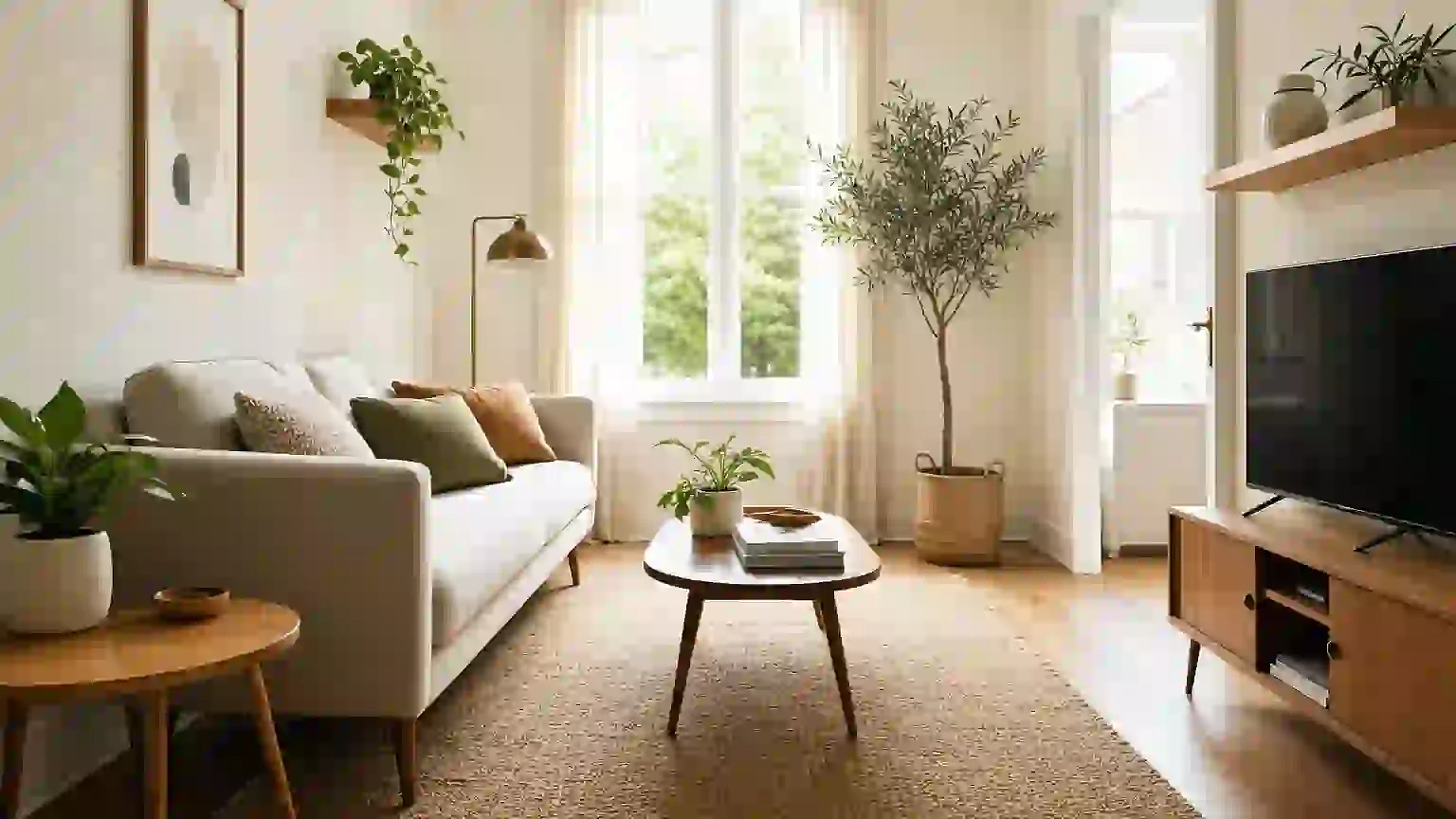
Bigger furniture does not make a small room feel bigger. That’s the opposite of true, and it’s the mistake I see in almost every cramped living room I walk into.
The real fix is scale, sightlines, and a few sneaky tricks with light and color. These small living room ideas focus on what actually changes how a room feels, not just how it photographs.
Why Bigger Furniture Backfires in Tight Spaces
A deep sectional might look cozy in a showroom. In a 12×14 foot living room, it swallows the whole floor plan.
The eye needs visible floor to read a room as open. When furniture legs disappear into a skirt, or a sofa runs wall to wall, there’s no breathing room left for your brain to process.
Designers call this “negative space,” and small rooms need more of it, not less. A sofa with exposed legs, like a mid-century frame, lets light pass underneath and tricks the eye into seeing more square footage.
I always tell people to measure twice before buying anything. Leave at least 30 inches of walking clearance between major pieces. Less than that, and the room feels like an obstacle course no matter how nice the furniture is.
Pick Furniture That Earns Its Keep
Small rooms can’t afford one-job furniture. Every piece should multitask.
- Choose a storage ottoman instead of a coffee table. It hides blankets and remotes while doubling as extra seating when friends come over.
- Swap a bulky media console for wall-mounted shelving. Floating shelves, anchored into studs, free up floor space a traditional console would eat.
- Use nesting tables instead of one large side table. They tuck away flush when not needed and pull out for guests.
- Pick a loveseat with slim track arms rather than a rolled-arm sofa. Track arms save 4 to 6 inches of width per side.
- Add a fold-down or drop-leaf desk if the room doubles as a home office. It collapses flat against the wall when you’re done working.
- Go with a swivel accent chair instead of a fixed recliner. It rotates to face conversation or the TV without needing extra floor clearance to open.
Pro tip: before buying anything, tape the furniture’s footprint onto your floor with painter’s tape. Live with it for two days. You’ll know fast if it’s too much.
Color and Light Tricks Designers Actually Use
Paint is the cheapest renovation tool you own, and in a small room it does heavy lifting.
Light, warm whites or soft neutrals on walls and ceiling bounce available light around instead of absorbing it. Behr and Benjamin Moore both sell sample pots for a few dollars, so test two or three shades on actual walls before committing to a full room.
Painting trim, walls, and ceiling the same color removes the visual stop signs that make a room feel chopped up. This monochromatic approach is one of the fastest small living room ideas to execute in a weekend, and it costs little beyond a gallon or two of paint, roughly $40-$60 depending on finish.
Mirrors matter here too. A large mirror placed opposite a window reflects daylight deeper into the room. Lean one against a wall rather than hanging it dead center, it reads more relaxed and less like a dentist’s office.
Layer your lighting instead of relying on one overhead fixture. A floor lamp in a reading corner, plus a table lamp near the sofa, softens shadows that make small rooms feel boxed in at night.
Rugs, Sightlines, and the Floor Plan Fix
The floor is doing more work than most people realize. Get it wrong, and nothing else matters.
A too-small rug is the single most common mistake I see. If the rug only fits under the coffee table, it chops the room into disconnected zones. At minimum, the front legs of your sofa and chairs should sit on the rug. An 8×10 foot rug works in most small living rooms under 150 square feet, anchoring the seating area without overwhelming it.
Arrange furniture so your main walking path is a straight, unbroken line from the entry to the far side of the room. Zigzag paths make a space feel cluttered even when it technically isn’t.
Floating your sofa a few inches off the wall, rather than pushing it flush, can actually help. It creates a sense of depth and gives the room layers instead of one flat perimeter of furniture.
Keep your tallest pieces, a bookshelf or armoire, against the shortest wall. This preserves your longest sightline for open space, which matters more than people expect in a small footprint.
Storage Solutions That Don’t Steal Space
Clutter is the enemy of small living room ideas, full stop. A perfectly laid-out room still feels cramped if every surface is covered in mail and remotes.
- Install floating shelves above eye level, around 66 to 72 inches from the floor, for books and décor you don’t need daily access to.
- Use a bench with hidden storage underneath a window instead of a console table, giving you seating and a hiding spot for shoes or throws.
- Hang a pegboard or slim wall organizer near the entry for keys, mail, and bags so they never land on the coffee table.
- Choose baskets that slide under console tables or shelving units, sized to the exact gap so they don’t jut into the walking path.
- Add a vertical bookcase instead of a wide one. A 12-inch-deep unit holds nearly as much as a bulky one while barely touching your floor plan.
Vertical storage is the throughline here. Every inch you build upward is floor space you don’t lose.
Does Furniture Arrangement Really Change How Big a Room Feels?
Short answer: yes, dramatically. The layout matters more than the square footage on paper.
Should the sofa face the window or the TV?
Face the room’s natural focal point, usually the fireplace or window, with the TV placed off to the side on a swivel mount if needed. This keeps conversation the priority and avoids forcing every chair into a rigid row facing a screen.
Is it better to push all furniture against the walls?
Not always. Floating one or two pieces slightly away from the wall often reads larger than a room where everything hugs the perimeter, because it creates layers and a defined center.
What if the room has to double as a dining or office space?
Use a round table instead of rectangular where you can. Round edges let foot traffic flow around corners instead of stopping dead, which matters a lot in a dual-purpose small room.
Small-Scale Decor That Doesn’t Clutter the Room
Decor is where small living room ideas go wrong fastest. More objects, even small ones, add visual noise.
Pick a handful of larger, intentional pieces instead of a dozen tiny ones. One substantial piece of art over the sofa reads calmer than five small frames scattered across the wall.
Houseplants help more than most people expect. A single 6-foot fiddle leaf fig or snake plant in a corner draws the eye upward, making ceilings feel taller. Skip the windowsill forest of small pots, it reads busy fast in a tight room.
Curtains hung close to the ceiling, rather than at the top of the window frame, stretch the wall visually. Mount the rod 4 to 6 inches below the ceiling line and let the panels nearly graze the floor.
Keep throw pillows to two or three per sofa, max. A pile of six turns seating into storage, and someone always has to move them before sitting down.
Budget-Friendly Upgrades Worth Trying First
Not every fix needs a renovation budget. Some of the best small living room ideas cost almost nothing.
- Rearrange existing furniture before buying anything new. Try three layouts over a weekend using the painter’s tape trick from earlier.
- Swap heavy curtains for sheer or lighter-weight panels, which let more daylight through without sacrificing privacy.
- Declutter surfaces first. A coffee table with nothing on it but one tray instantly reads more spacious.
- Add a single large mirror, often found secondhand for $20-$50, to bounce light and visually double a wall’s depth.
- Repaint just the trim if a full room isn’t in the budget. Crisp white trim against a soft wall color sharpens the whole space for the cost of a quart of paint.
Try the free changes first. You’ll often solve half the problem before spending a dollar on new furniture.
Making a Small Living Room Feel Like Home
None of this requires knocking down walls or spending a renovation budget you don’t have. The biggest wins come from scale, sightlines, and ruthless editing of what actually earns a spot in the room.
Start with furniture that multitasks, get your rug size right, and let paint and light do the rest. Small living room layouts improve fastest when you tackle one variable at a time instead of overhauling everything in a weekend.
Give yourself permission to live with a layout for a few days before deciding it’s wrong. The room will tell you what it needs if you pay attention to where you actually walk, sit, and pile your stuff.
Frequently asked questions
What is the best furniture layout for a small living room?
Float your main seating slightly off the walls and keep a clear, straight walking path from the entry to the far side of the room. Anchor the seating area with a properly sized rug so the layout reads as one connected zone instead of scattered pieces.
How do I make a small living room look bigger without renovating?
Paint walls, trim, and ceiling the same light color, add a large mirror opposite a window, and swap heavy curtains for sheer ones. These changes cost relatively little and can be done in a weekend without touching the floor plan.
What size rug works best in a small living room?
An 8×10 foot rug fits most small living rooms, as long as the front legs of your sofa and chairs sit on it. A rug that only fits under the coffee table will make the room feel chopped into pieces.
Should I avoid dark colors in a small living room?
Not entirely. Dark colors can work in a small room with strong natural light, but they generally make a dim room feel smaller. If you love a dark palette, pair it with layered lighting and keep furniture scale modest so the room doesn’t feel heavy.
Is it worth buying multipurpose furniture for a small living room?
Yes, it’s one of the highest-impact changes you can make. Storage ottomans, nesting tables, and fold-down desks let one piece do two or three jobs, which frees up floor space that a single-purpose piece never could.




Leave a Reply